Gen Z, take a bow, for you’re the first generation to take a truly audacious stand against the binary. It is a bold and personal stand: you’ve claimed your pronouns.
Every youth protest in history has stirred a societal tempest, but Gen Z’s declaration of self has ignited a firestorm. Parents, families, and friends are called to action: Will you use the self-identifying label I’ve chosen and do your best to see me as I see myself? Will you stand and defend me from those who refuse?
Who am I? is an age-old question that beckons all of us; a flashlight with which we search throughout our lives. The answers we discover are shaped by experiences, relationships, personal reflection and growth. Rarely does Who am I? lead to a binary answer – humans are much too complex for that. Gen Z understands this, and, when it comes to gender and sexuality identity, I believe they’ve got it right.
As a young adult, I recall watching a home movie recorded on reel-to-reel tape by my grandfather. He’d taken the footage some six months after the John F. Kennedy assassination. I mention this historical time stamp because, in a way, this home movie is the Zapruder film of my gender identity.
In the film is my sister, at four years of age, and me, at three. We’re seated on a blanket, spread beneath the shade of a large Oak, eating frosted cake. It must have been a family celebration of some sort, because my sister and I wore summer dresses, trimmed with lace and paired with shiny, black patent-leather shoes. A barrette pinned the bangs of our hair neatly to the side. We looked like twins, except my sister was brunette and I was blonde - plus another distinction I was about to notice. As we move about, it became strikingly clear: despite the dainty dress, shoes, and barrette, my every movement and mannerism was much more “boy” than “girl”, even at this tender age of three.
The memory of that home movie motivated me to pry into an old “memory box” in the basement, where I found my first diary. In a spiral-bound notepad of 3 x 4” lined paper, I wrote my name and age (six), and described my adventures from that summer. I drew all kinds of pictures, in which I was a pirate or baseball player, and always there was a dog tagging along. My family called me Kimmy, but in the diary I refer to myself as “Timmy”, almost certainly naming myself after the boy in my favorite TV show, “Lassie”. As a gift for my 7th birthday, I received an actual dog – a Shetland Sheepdog – a smaller, darker version of a Collie, although her face and disposition were remarkably similar to Lassie’s.
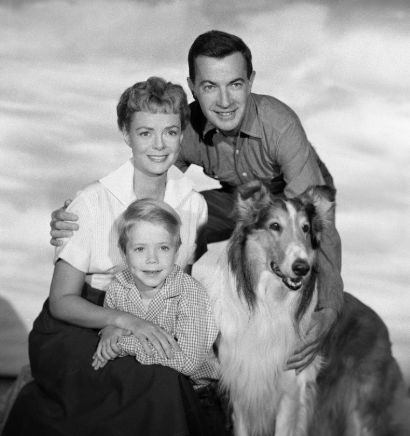
Timmy with his dog and parents, from the television show, “Lassie”.
Through my prepubescent years, the adults in my life seemed to embrace my “tomboy” persona. I played baseball with the neighborhood boys and GI-Joes instead of Barbies. But I understood my biology, and I was very much an obedient child: I joined the girls when the teacher asked us to line up at school, despite the angst of being separated from my friends, the boys against the opposite wall, where I knew I belonged.
When puberty arrived, my body began to change, and suddenly I was expected by adults to transform into a “proper” young woman. That is when I felt an internal tearing begin. It started small and spread during my teenage years, until who I was on the inside and who I was desperately trying to be on the outside were at constant war. I tried to dress and act like a girl, but I was unable to shed my inner self, the boy fighting back.
That’s not to say I did not embrace my “feminine” qualities. I was growing into a compassionate, sensitive, empathetic, and nurturing individual; these are characteristics typically associated with femininity and ones I quite liked. I also became a passionate fangirl of The Jackson 5 in the 1970’s, thanks to my newly acquired hormones. Photographs of the musical and handsome boys were plastered an entire wall of my bedroom. I was in love!
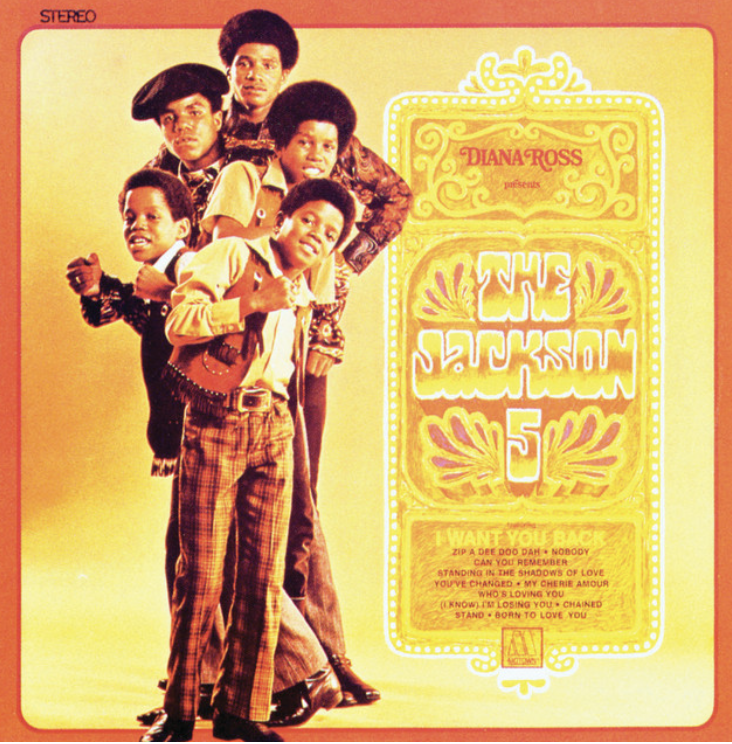
Growing into a sexual identity took time. Oh, I had crushes, dated, fell in love. I suffered hurt and, unfortunately, likely inflicted it as well. My love relationships were with both women and men. In the end, I married the human who was the perfect match for me. I’ve come to believe that falling in love is about chemical, spiritual, and emotional forces that are stronger than gender, alone.
If there is a concept perhaps all generations can agree upon, it’s that the formation of self-identity, of becoming, is not as simple as a stage of adolescence. We retain the right to self-identify, to name who we are, for the entirety of our lives, because we continuously learn, experience, reflect, and grow. I will never forget the cover of Sports Illustrated in 1999, featuring Brandi Chastain as she celebrates during World Cup soccer play. It was a life-changing moment: I could finally identify with a woman shown in a magazine for the very first time in my life. I was 38 years old.
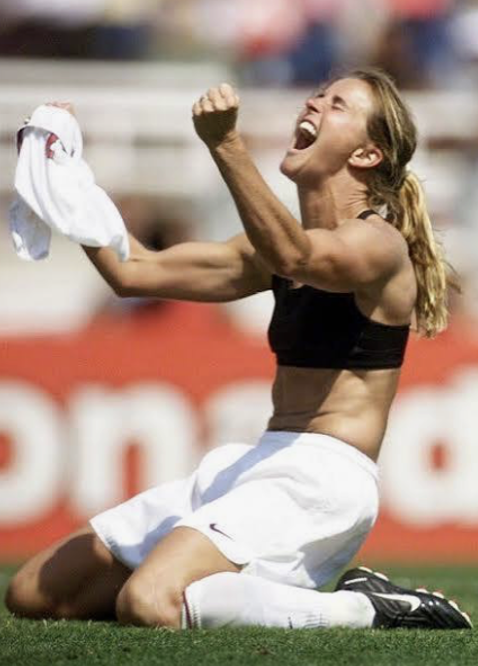
More than a quarter of a century ago, this photograph must have offered so many children a lifeline of confidence and hope. Today, self-expression continues to expand its boundaries. I recently wrote a work of fiction that features two central characters; both are 20-something males, and one of them is transgender. My writing group was curious about my POV choices. My answer: one of the males is an exploration of my inner self, who I was in those early years after college; the trans character is an exploration of my outer self, perhaps who I may have been, had I been born in this century. What is most important to the work is discovering identity in a very personal way.
I began using “she/they” pronouns as an author. It’s a means of connecting with other queer writers and readers. A means of reflecting both my biological self and the non-binary person I’ve been since birth. A means of being uniquely me.
And I have Gen-Z to thank for the language and the courage.
